Brotherly Love Concrete
Concrete Removal and Replacement in Norfolk, VA
Brotherly Love Concrete removes and replaces failed concrete in Norfolk and across Hampton Roads, including driveways, walks, patios, steps and pads that have cracked through, settled, heaved or flaked past repair. The work is sawcutting, breakout and haul off, then correcting the base that caused the failure before the new concrete goes down.
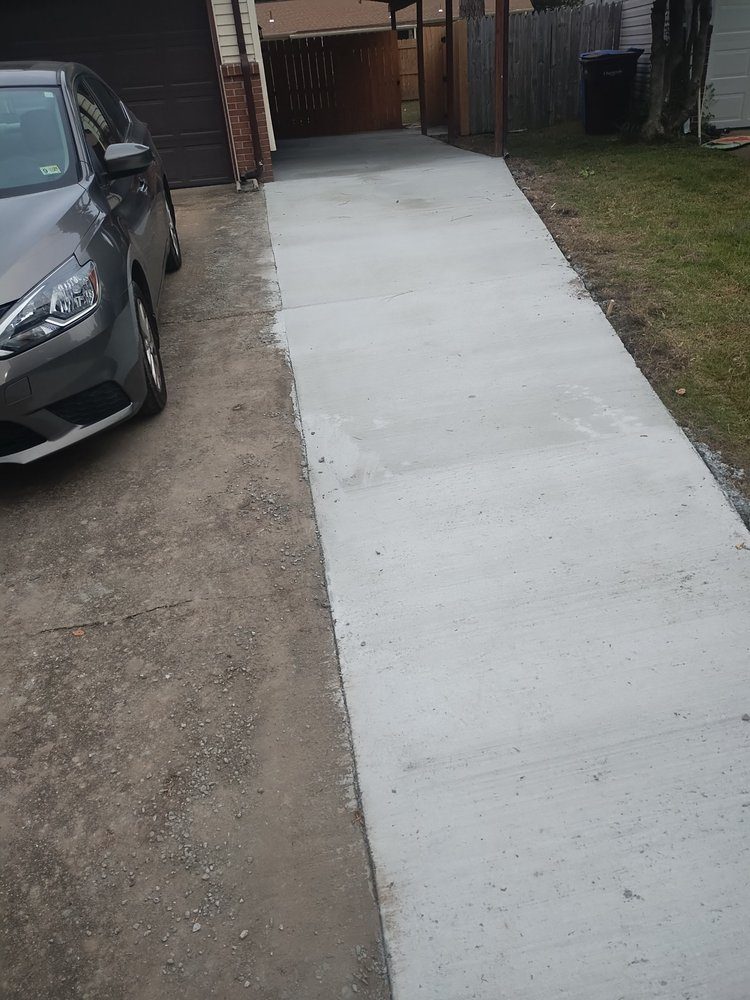
Finding out why it failed
Most flatwork that fails does so because of what is underneath it rather than what is in it. The NRMCA guide to cracking lists improper subgrade preparation, missing joints, excess water in the mix, poor finishing and inadequate curing among the usual causes. A slab bridging a soft spot cracks at the soft spot, and a driveway that broke under a truck was too thin for its load.
The cause decides the repair. Pouring a new slab onto the ground that failed the old one gives the same result on a delay, and it is the most common way one replacement turns into two.
Tree roots are another frequent cause, especially for walks and drives near mature trees. Where roots are lifting the concrete, removing and repouring without dealing with them only resets the clock, so the plan covers the root path, a new route, or both.
Removal
Removal starts with a sawcut to a clean line, at an existing joint where there is one. Breaking to a ragged edge leaves a weak, irregular seam for the new concrete to meet, and the repair often starts failing at its own boundary.
Breakout and haul off follow. On a site with tight access, how the broken concrete gets out shapes the schedule, so it belongs in the plan before work starts. Haul off covers the broken concrete and any unsuitable soil that comes out with it, so the site is left ready for base work instead of stacked with rubble.
Where the concrete coming out sits against something that stays, such as a foundation, a pool shell, an existing walk or a neighboring slab, the removal is careful work and the thing being protected sets the pace.
Correcting the base
With the concrete out, the ground is open, and that is the moment to fix what caused the problem. Soft or unsuitable material comes out, the base is rebuilt and compacted to the depth the job needs, and where water is the issue the fix is deeper excavation and more stone rather than the same base placed faster.
This step is the one most easily skipped, and it is invisible the day the job ends. Two replacement prices for the same driveway can be far apart because of what happens here, and the difference shows up later as settlement or new cracks. Ask what the base correction includes when comparing quotes.
Ground conditions make this step matter more. The USGS reports that land in the southern Chesapeake Bay region is subsiding and that subsidence raises flood risk in low lying areas. Ground that has stayed wet for years under an old slab often needs more than a fresh layer of stone on top.
The new pour
The new concrete is tied to the existing at the right elevation on every edge, so there is no lip to trip on and no seam where water collects. Isolation joints go where the new work meets a building or a slab that moves on its own.
Thickness and reinforcement are set for the load the slab will actually carry rather than copied from what was there. If the old slab failed because it was too thin for what drives on it, rebuilding it at the same thickness rebuilds the same failure. New driveways and patios follow the same rule.
The color will not match the surrounding concrete. New concrete cures to a shade set by the mix, the weather that week and its age, so a replacement panel looks newer than its neighbors. The difference softens over the first year without disappearing, so plan seams at natural breaks where you can.
After the replacement
A replacement slab needs the same care as any new concrete. Curing starts as soon as finishing ends and keeps the slab from drying out, which the NRMCA curing guide ties directly to how much strength the concrete reaches. The NRMCA scaling guide advises against deicing chemicals during the first winter, so use sand for traction if ice comes early.
Removal and replacement covers driveways, walks, patios, steps, pool decks and pads. Norfolk is the base. Work is taken across Virginia Beach, the Eastern Shore and the surrounding Hampton Roads cities, all listed on the service area page.
Questions
Common questions
Does cracked concrete always need replacing?
No. It depends on what caused the cracking. Fine surface cracks from shrinkage are mostly cosmetic and can often be left alone or sealed. A slab that has broken because the base under it failed is a different problem, and patching the surface there only delays the next failure.
Do you handle removal and haul off?
Yes. Sawcutting to a clean line, breaking out the old concrete and hauling it away are part of a replacement. On a site with tight access, how the broken material gets out affects the schedule, so it should be planned before work starts rather than worked out on the day.
Will the new concrete match the old?
Not exactly. A replacement panel will look lighter or darker than the concrete around it at first, because shade depends on the mix, the weather that week and age. The gap narrows over the first year but never closes completely, which is why seams go at joints and natural breaks.
Why did my concrete fail in the first place?
Usually because of what was underneath it, though jointing, thickness for the load and curing all play a part. A slab bridging a soft spot cracks there, and one that settled did so because the ground moved or was never properly compacted. Tree roots are another common cause.
Can you replace concrete next to a pool or a foundation?
Yes. Removal next to something that has to stay is careful work, and the structure being protected sets the pace. The joint between the new concrete and whatever it meets is rebuilt with a flexible or premolded filler rather than filled solid, so the two can move independently.
Is replacement more expensive than repair?
Up front, yes. Over the life of the concrete it depends on whether the cause gets fixed. A repair that leaves a failed base in the ground pays for a delay, while a replacement that corrects the base can last far longer. Knowing why the concrete failed is the starting point.
Tell us about your project
Call, or send the project details and location through the estimate form.