Norfolk, VA
Concrete pool decks and surrounds
A pool deck is flatwork with two extra problems: it is walked on barefoot and wet, and it sits against a structure that must not be disturbed. Both of those change how the slab is laid out, sloped and finished.
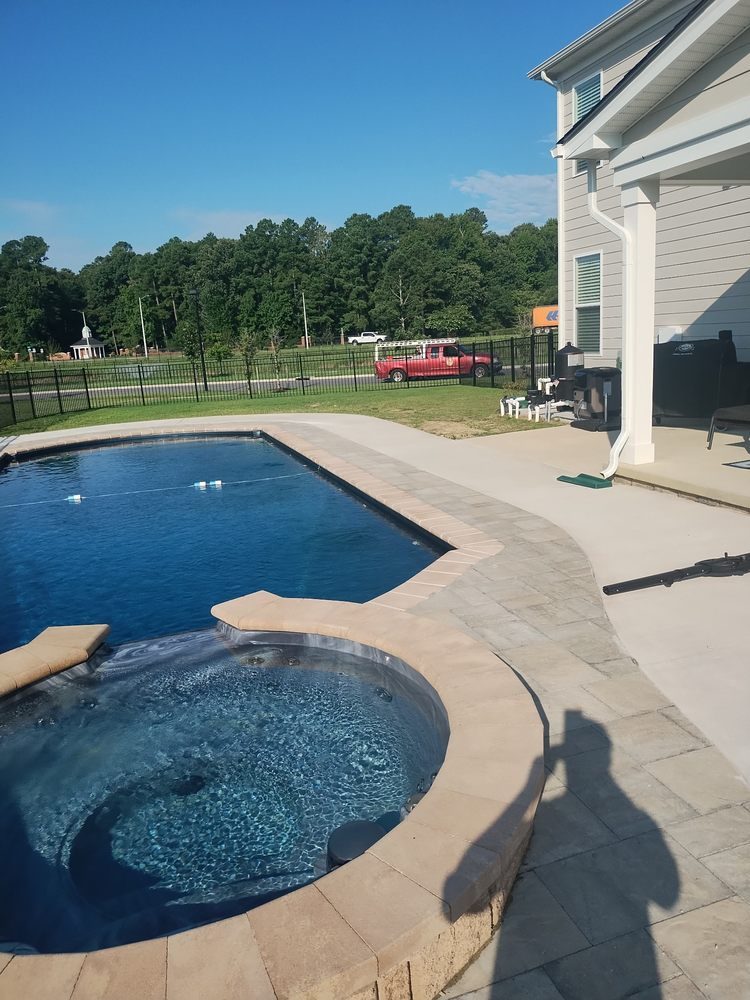
Slope and drainage around a pool
Water leaves a pool deck constantly, and where it goes is the first decision on the job. The deck slopes away from the pool, so that splash out and rain carry debris away from the water rather than back into it. On a deck that ties into a patio or runs up against the house, that slope has to work with the slopes already there rather than fighting them.
Standing water on a pool deck is more than a nuisance. It is slippery, it stains, and in this climate it works at any joint it can get into. A deck that ponds is a shorter lived slab as well as an uncomfortable one.
Where a deck drain or a channel is part of the design, the elevations get set around it from the beginning. Retrofitting drainage into a slab that was poured flat is not a small job.
Working against the pool structure
The deck meets the pool at a joint, and that joint is doing real work. The pool shell and the deck slab are separate structures that move independently, and the expansion joint between them is what keeps the deck from bearing on the shell or cracking as the ground moves.
That joint gets formed properly rather than cut in afterward, and it gets sealed with a flexible filler rather than a rigid one, so it can still move. A joint that has been filled hard or paved over transfers movement straight into whichever of the two is weaker.
Around the coping, the relationship between the coping height and the deck surface decides whether water runs off cleanly and whether the edge feels right underfoot. That gets established before the forms are set rather than discovered at the pour.
Finish and comfort underfoot
A pool deck is walked on barefoot and wet, which rules out the smooth finishes. A trowel finish gets genuinely dangerous around water. Broom finish gives grip and is the standard, and a lighter broom gives grip without being harsh on bare feet.
Surface temperature is the other comfort question. A dark deck in full summer sun in this region gets hot enough to be unpleasant, and lighter surfaces stay cooler. That is worth factoring into any decision about color or a decorative finish.
Decorative finishes are available where a project calls for one. Around a pool they get judged on texture as much as on appearance, since whatever is chosen has to stay safe wet.
New pools and existing pools
On a new pool, the deck comes after the shell and the plumbing and works around both. Sequencing matters here, because a deck poured before something underneath it is finished means breaking concrete to get back to it.
On an existing pool, the work is usually replacement of a deck that has cracked, settled or become unsafe underfoot. Removing an old deck next to a finished pool is careful work, and the shell and the coping are the things being protected the whole way through. The base underneath gets corrected while it is open, since a deck that settled once will settle again on the same ground.
Access is worth settling before a date is committed. A pool is usually in a back yard, often behind a fence or a gate, and how concrete gets from the truck to the forms decides how the day runs. Where a truck cannot reach the deck directly, the pour gets planned around that rather than discovered on the morning, because concrete does not wait while somebody works out a route.
Questions
Common questions
Which way should a pool deck slope?
Away from the pool, so that splash out and rain carry debris away from the water rather than back into it. Where the deck meets a patio or the house, that slope has to work with the slopes already there rather than against them.
What finish is safe around a pool?
Broom finish is the standard because it gives grip on a wet surface walked on barefoot. A lighter broom gives that grip without being harsh underfoot. Trowel finishes get slippery around water and are the wrong choice here.
Can you replace a pool deck without damaging the pool?
Protecting the shell and the coping is the whole job on a replacement, and it sets the pace of the removal rather than the other way round. The expansion joint between deck and pool gets rebuilt and sealed properly rather than filled hard.
Why is there a gap between my pool and the deck?
There should be a joint there. The expansion joint between the pool shell and the deck slab lets two separate structures move independently. It is meant to be filled with a flexible sealant rather than left open or filled hard, and that sealant is worth checking every few years, because a rigid filler transfers movement into whichever structure is weaker.
Does a pool deck get hot in the summer here?
Any hard surface in full sun does, and darker surfaces get hotter than lighter ones. That is worth weighing when choosing color or a decorative finish, since the deck is walked on barefoot at the hottest part of the day.
Can a pool deck be extended?
Yes, with an isolation joint where new meets old. The new concrete will read as newer than the existing for a good while, since color depends on the mix, the weather at the pour and time, so an exact match is not a promise worth making.
Tell us what you are looking at
Call, or send it through the form with the location. Either reaches the same person.